

by Grace Cajski, Pacific East CC
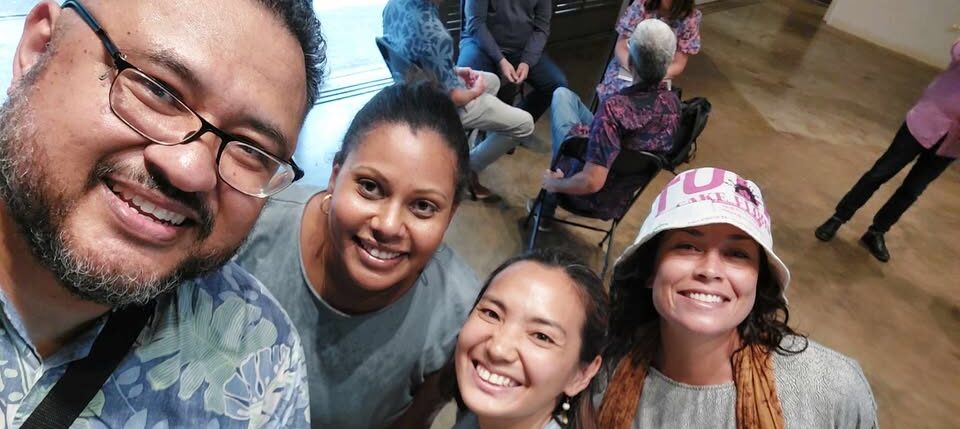
The Pacific East Comprehensive Center (Pacific East CC) advisory board gathered April 6–7, 2026, on Hawai’i’s Oʻahu island for discussion, reflection, and collaboration to best prepare the team to strategically—and locally—tackle the region’s education challenges. This gathering brought together educators, administrators, researchers, and community leaders from across the Pacific region.
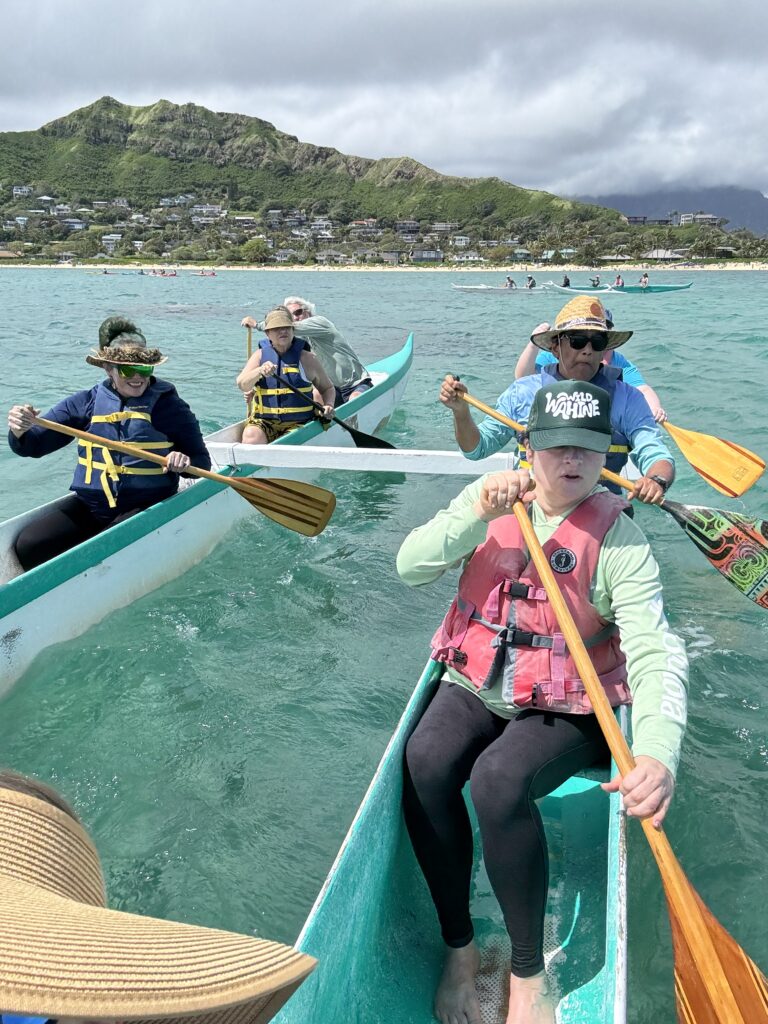
The day began with a paddle in Lanikai, led by Pacific East CC educator Derek Esibill. According to Mr. Esibill:
“We are all in the same Waʻa (a traditional canoe); it is our choice whether we are paddling together or in isolation. To move forward with intention, we need to recognize and implement the assets each of us bring individually to make the team stronger.”
After paddling, the group rinsed off and headed north to Waikalua Loko Iʻa, an ancient Hawaiian fishpond. At this wahi pana (storied place), the group gathered in an Aloha Cricle where the oli Ola i Ka Hā was performed and explained. This traditional chant focuses energy, asks permission, and demonstrates respect for the land.
Kapono Ciotti, Pacific East CC co-director, then led the group in a kilo (a keen observation exercise) before everyone came together for the formal advisory board meeting. During the formal session, the group discussed the challenges and opportunities facing education systems in Hawaiʻi and the Republic of the Marshall Islands (RMI), as well as the Pacific East CC’s role in supporting meaningful, community-driven solutions.
Throughout the discussions, the advisory board landed on a key theme: The Pacific East CC projects addressing high leverage education problems in the region are most impactful when they are built in partnership with the people they aim to serve, supporting them in their work and in the lives they hope to lead.
Dr. Diane Barrett, professor of education at University of Hawaiʻi at Hilo, remarked:
“We could sit in a classroom and teach kids things, but they’re only going to retain a very small portion. But if we take them to a place and show them that they can learn what they’re learning in the classroom in that place, they remember it.”
To close, the group gathered in one more circle to share what they had learned over the course of the day.
Looking ahead, advisory board members shared hope that these projects will lead to meaningful, lasting change: education systems that are contextually grounded, responsive to community needs, and capable of helping both students and educators thrive.
Through continued collaboration, listening, and shared learning, the Pacific East CC is working toward that vision—one shaped not just for communities, but with them.