

By Grace Cajski, Pacific East CC
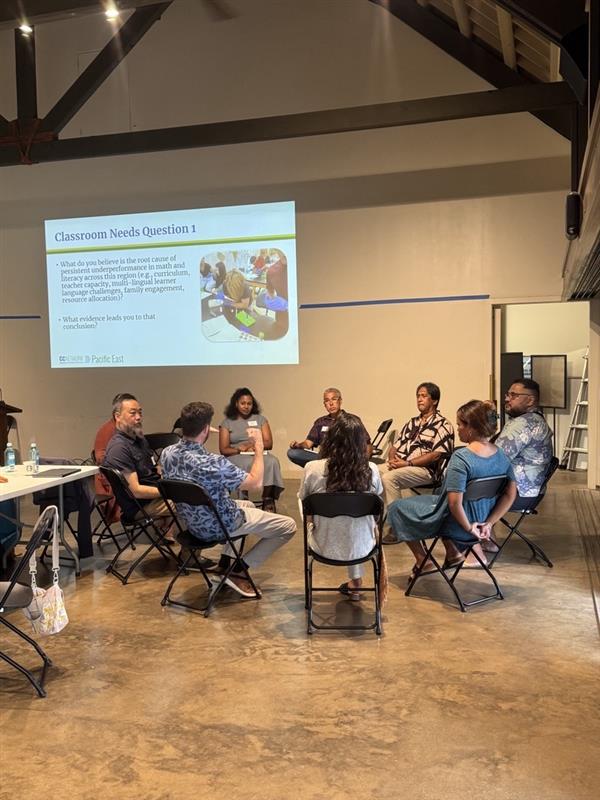
Members of the Pacific East Comprehensive Center (CC) advisory board, including educators and community partners, gathered on April 6 and 7, 2026, for dialogue and place-based learning as part of the CC’s ongoing work across Hawaiʻi, Republic of the Marshall Islands (RMI), and American Samoa.
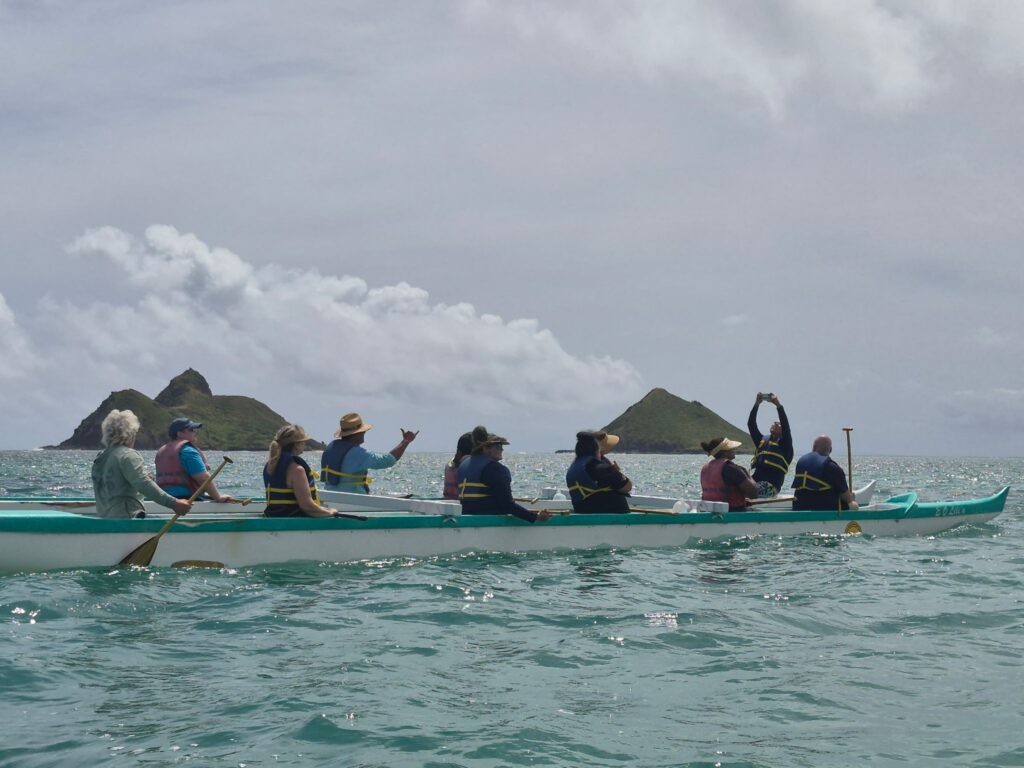
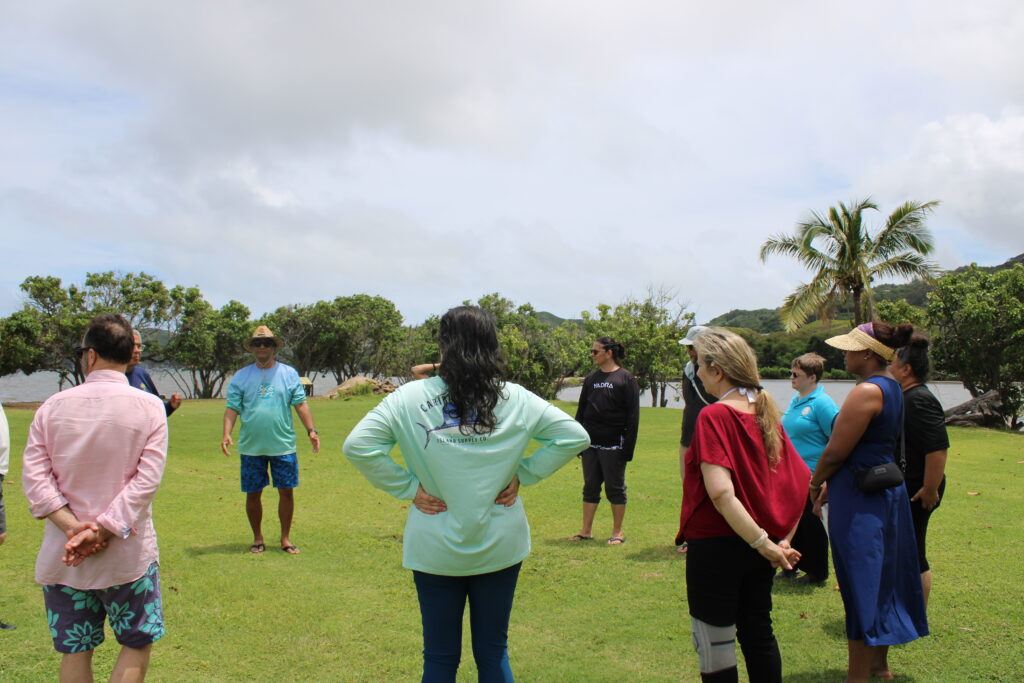
After a paddling excursion, an afternoon at Waikalua Loko Iʻa fishpond, and a day at Bishop Museum, the group was able to ground conversations in both relationships and place. As the meeting progressed, it became clear that the board’s purpose is not just to carry out the intense work of strategic systems change in education, but also to always emphasize people, place, and partnership.
The guiding structure of the gathering was collaborative advancement of three high-leverage problems (HLPs) identified across the Pacific East region: multi-age learning in the Republic of the Marshall Islands (RMI), contextual curricula and assessment in Hawaiʻi, and strengthening science education systems in Hawaiʻi. But the purpose of the meeting was to build pilina (relationships) and connections, both as a board and as a community.
For Natalie Nimmer, PhD, commissioner of education for the RMI Public School System, participating in the advisory board is about ensuring that the CC’s work responds directly to local needs:
“It’s important to me so that we can get the right technical assistance to actually support and address the needs in the Marshall Islands.”
In a place where most schools are small and increasingly educate multiple grades, Nimmer emphasized that what have historically been framed as limitations can instead be seen as opportunities:
“This project has the potential to transform the mindset: to think about these multi-age, multi-grade classrooms as an opportunity to build stronger learning.”
Members echoed that reframing—from deficit to strength—throughout the meeting. Advisory board members consistently highlighted that this work is about designing solutions that are grounded in lived realities rather than imposed from the outside. Dr. Elizabeth Switaj, vice president for academic and student affairs at the College of the Marshall Islands, highlighted the importance of community relevance:
“If students can’t identify with it, it doesn’t take.”
To Switaj, the value of the advisory process lies in bringing regional perspectives together to identify best practices that resonate across contexts.
The board’s conversations revealed that partnership is a practice that requires ongoing listening and trust. Bella Finau-Faumuina, a parent and former teacher, described her role on the board as one deeply connected to the communities she serves.
“I think I am here because of those relationships, to represent these people who are not physically here, but are here with me.”
Tackling high-leverage issues, to Finau-Faumuina, has the potential to create real shifts for young people—particularly those who are navigating challenging circumstances. That cannot happen without stakeholder voices.
Rebecca Jones, a Pacific East team member with experience across multiple education systems, reflected on the value of bringing both local and external perspectives into the work:
“Sometimes it’s hard to see the bigger picture when you’re in it.”
Jones further noted that her role is to support rather than dictate. Her recommendation for project teams moving forward was simple but critical: Remain flexible. What does she feel is key to navigating the complexities of this kind of cross-regional work? She answered this directly:
“Being able to shift and move accordingly, when you have to.”
This flexibility will allow the board to navigate each HLP dynamically, collaboratively, and actionably to foster thriving students, support teachers, and engaged communities. Nimmer plainly articulated a vision that embodies what Pedacific East CC is working toward:
“We want students to learn. And we want teachers to feel good. And we want communities to like it.”
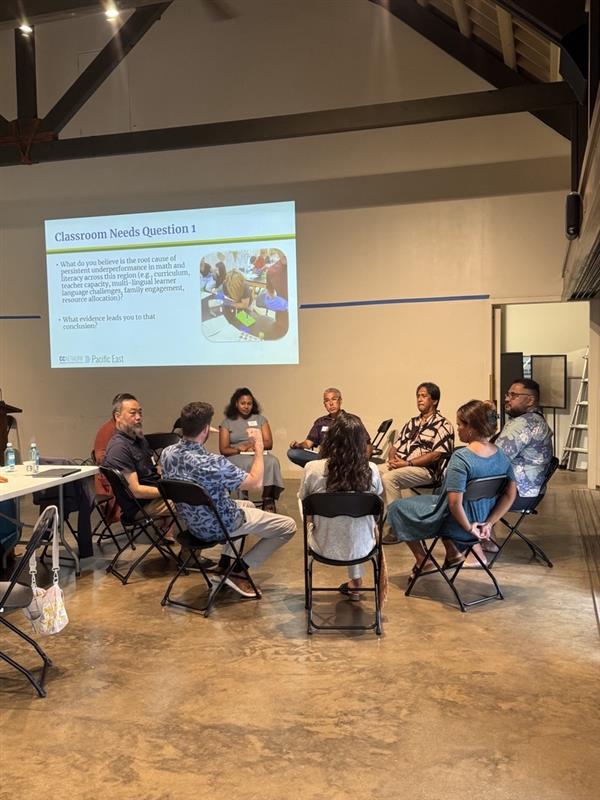
Through these discussions, it became clear to the board that centering stakeholder voices and embracing the complexity of different contexts will allow the Pacific East CC to lay the groundwork for effective and enduring solutions.