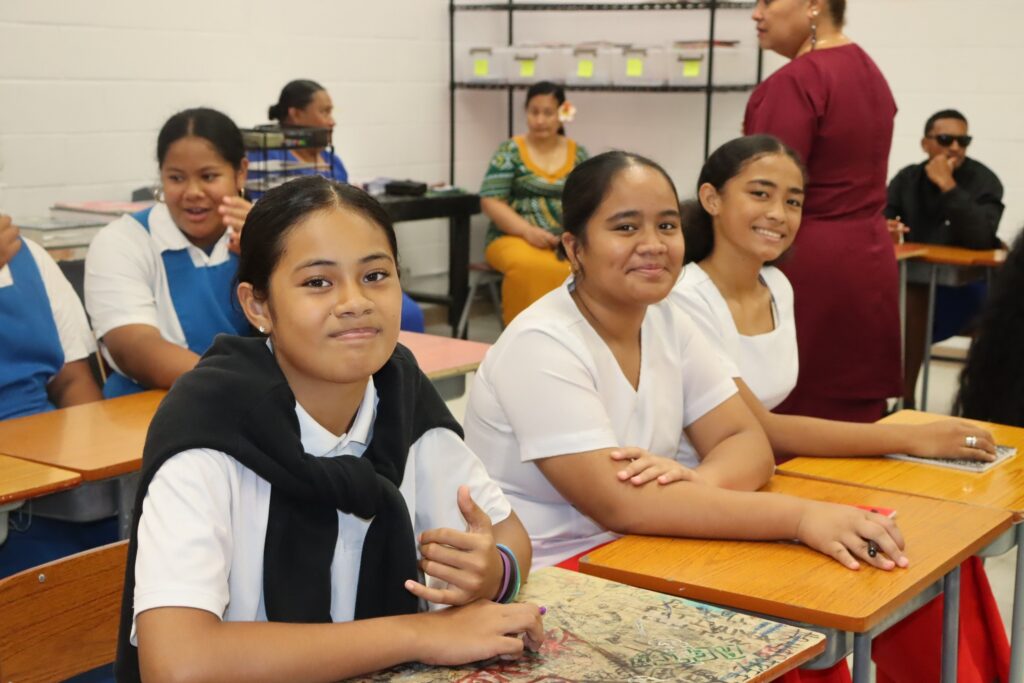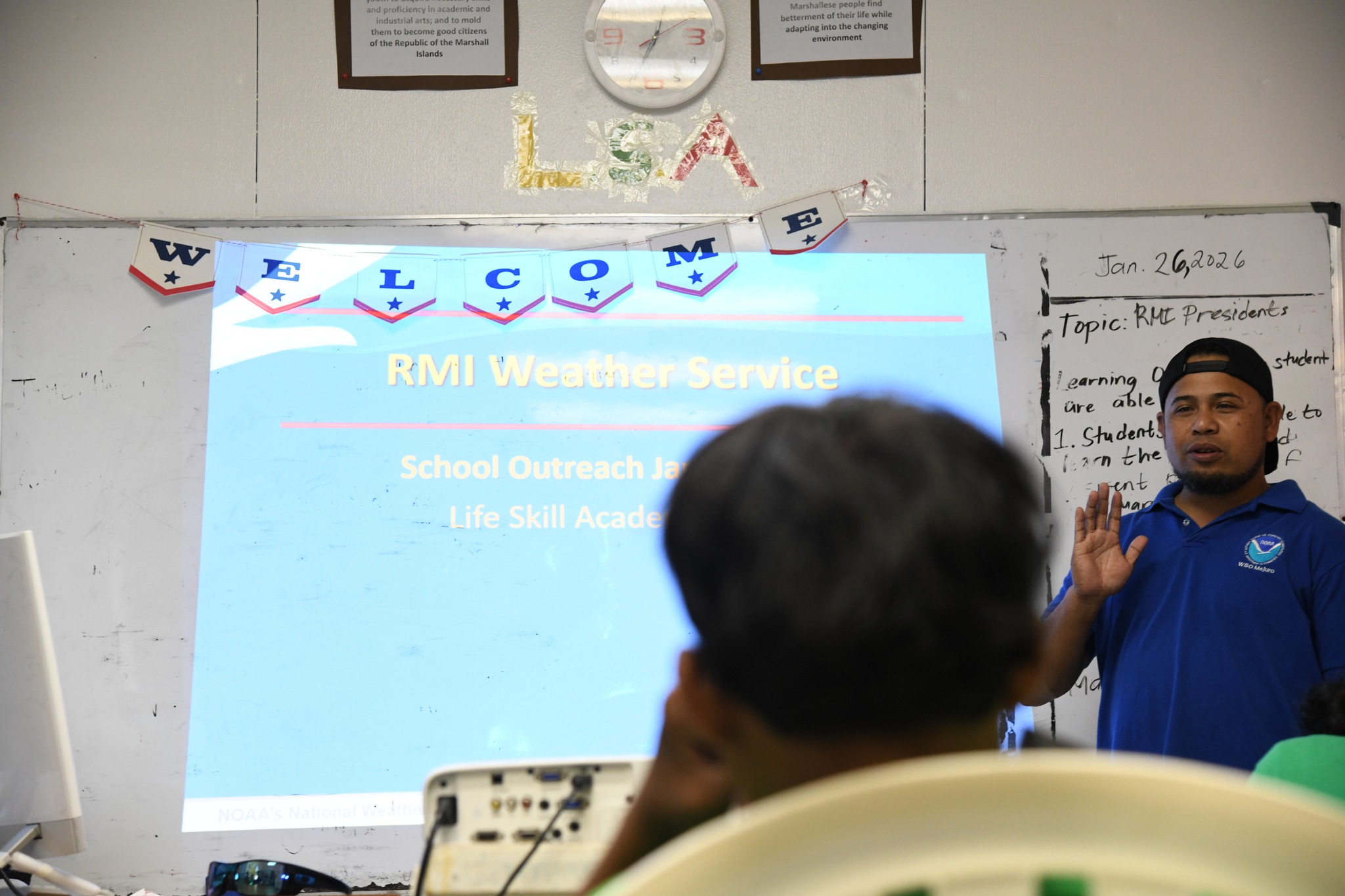
The Pacific East CC’s Republic of the Marshall Islands (RMI) project applies evidence-based practices to address a critical and growing challenge: declining student enrollment in remote schools that has made it increasingly difficult — and in many cases financially unsustainable — for RMI to staff individual grade levels and keep schools open.
RMI’s High Leverage Problem
Coping with Micro-Enrollment in Rural Atolls of the Marshall Islands
Background
The Republic of the Marshall Islands Public School System comprises 86 schools, of which 77.9 percent are located in rural outer island communities. These schools serve a shrinking student population as families leave their ancestral homes for employment in RMI’s urban centers. The sustained decline has left most rural schools operating multi-grade classrooms with enrollments of 10 to 30 students or fewer.
Sustaining these micro-enrolled schools has proven increasingly difficult. Fiscal constraints and limited capacity lead to inconsistent resource allocation, uncredentialed educators, school closures and consolidation, inadequate facilities, and a shortage of age-appropriate learning materials. Families who remain face the difficult reality of transporting and housing children on neighboring atolls far from home.
How will RMI address challenges related to micro-enrollment schools?
RMI’s Ministry of Education (MOEST) has identified several priorities: multi-age instruction, digital learning integration, expanded broadband connectivity, family-centered practices, and responsible school consolidation policies. Together, these strategies aim to stabilize the declining rural student population and strengthen educational practice in micro-enrolled settings.
Pacific East CC will provide targeted support in three areas:
- Sustainable policy development
- Teacher training
- Data-driven practices tailored to rural contexts — with the goal of stabilizing school operations and ensuring students receive consistent, standards-aligned learning experiences regardless of location
What will the project achieve?
The project team will conduct ongoing evaluation and analysis throughout the project period, enabling continuous improvement and iterative course corrections. Expected long-term outcomes include improved student literacy and mathematics achievement, increased student retention, expanded broadband access, stronger formal teaching skills among rural educators, and greater opportunity for students to learn and remain in their ancestral communities.
Key RMI leaders
(Listed Alphabetically)
- Sandy Dismas-Konelios, Associate Commissioner of School Management
- Hetine Heine, Deputy Commissioner of Academics
- Theresa Kijiner, Associate Commissioner of Early Childhood Education
- Hannah Lafita, Associate Commissioner of Primary Curriculum, Instruction, and Assessment
- Natalie Nimmer, Commissioner of Education
- Biram Stege, HLP lead, Pacific East Comprehensive Center
- Mark Stege, HLP administrative support, Pacific East Comprehensive Center
Contact
Kapono Ciotti, co-project director, Pacific East Comprehensive Center [email protected]
Photo Credit: RMI Public School System and its Facebook page.
HLP Resources
Coming soon!