High Leverage Problem(s)
Students in American Samoa do not always have consistent access to high-quality teaching and learning environments when regular classroom teachers are absent or staffing capacity is strained.
Background
Students in American Samoa do not always have consistent access to high-quality teaching and learning environments when regular classroom teachers are absent or staffing capacity is strained. When an absence cannot be covered, schools may combine classes, assign an adult without adequate preparation, or lose planned instructional time. These disruptions can also affect services for students with disabilities and increase the burden on teachers and school leaders. As a result of uncovered teachers’ absences and the resulting combined classes, students experience reduced access to planned lessons, interrupted services, and instability. Similarly, schools experience instability in staffing even while teachers take on additional work.
On the other hand, a more reliable continuity model can protect daily learning time, improve school readiness for teacher absences, strengthen the preparation of substitute personnel, and reduce the coverage burden on other teachers.
How will American Samoa and Pacific East CC address challenges related to instructional continuity?
American Samoa’s HLP focuses on strengthening instructional continuity so students continue receiving consistent, planned learning when their regular teacher is unavailable. Through American Samoa Department of Education’s (ASDOE) emerging Substitute Teacher Equity Program Support (S.T.E.P.S.), Pacific East CC and local education partners will use discovery and research to understand current needs, develop a sustainable substitute-teacher framework, and inform future piloting and implementation.
Pacific East CC will provide targeted support for a focused pilot of S.T.E.P.S. in the following areas:
- Instructional quality
- Student engagement
- Teacher support
- Workforce development
What will the project achieve?
The project advances ASDOE’s emerging vision for a more sustainable substitute teacher workforce. The proposed pilot would test a limited set of practices needed to move that vision from concept to implementation while generating evidence for future ASDOE decisions.
Key American Samoan leaders
- Deputy Director Lance Glodowski – ASDOE executive sponsor and senior decision-maker.
- Program Manager Maria Tuato’o – ASDOE primary point of contact and implementation coordinator, bringing prior S.T.E.P.S. experience.
- Ben Cronkright and Kapuana Ainu’u – Pacific East Comprehensive Center project co-leads, facilitator, and primary technical assistance partner.
Contact
Kapono Ciotti, co-project director, Pacific East Comprehensive Center [email protected]
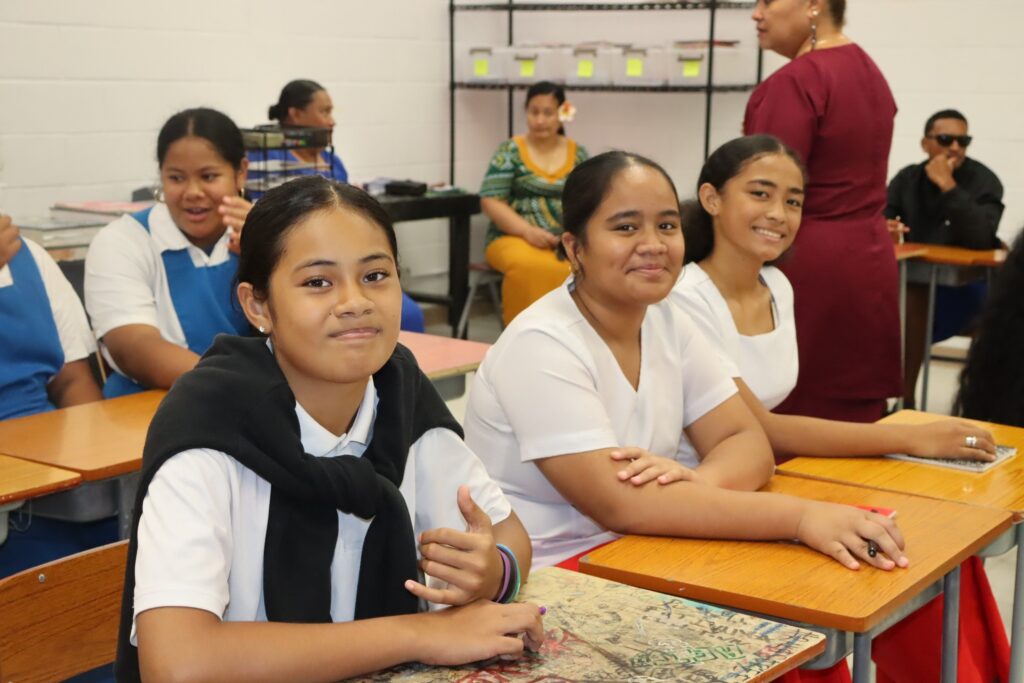
Photo Credit: American Samoa Department of Education Facebook Page
Related Resources
Coming soon!